The technologies behind Israel’s military superiority in the war with Iran
By Marcus Hale · June 7, 2026
Category: systems-technology-reviews
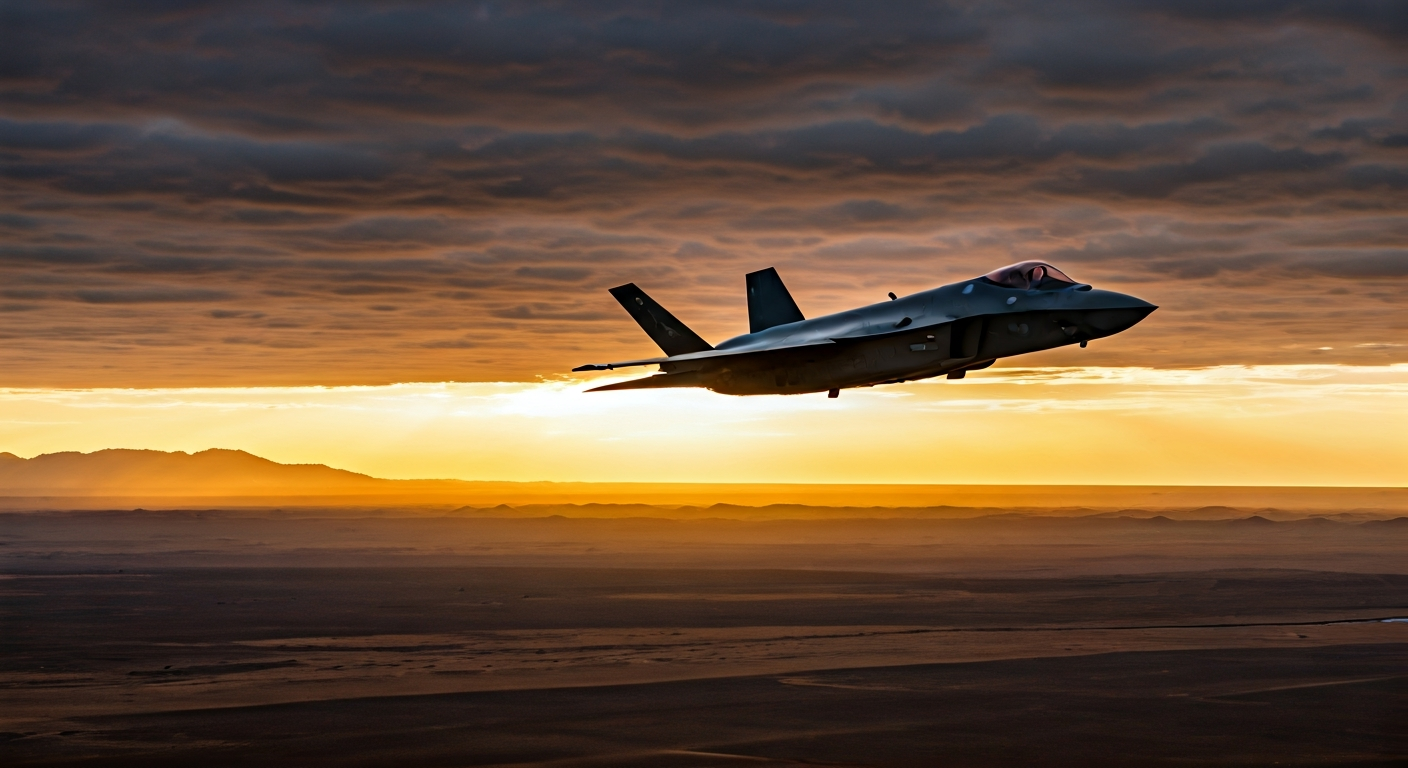
Israel's airspace dominance during the 2026 Iran conflict was built on decades of layered technology - here is how stealth aircraft, loitering munitions, and electronic warfare made it possible.
Key takeaways
The problem Israel's 2026 airspace dominance over Iran is widely reported but rarely explained at the system level.
Core insight Airspace control required stealth, loitering munitions, and electronic warfare working as one integrated stack.
Practical outcome Readers can assess which specific technologies drove Israeli success and what other air forces must now develop.
On the night Israeli strike packages crossed into Iranian airspace in 2026, something notable happened - or rather, failed to happen. The Iranian air defense network, built over decades with Russian and Chinese assistance, did not meaningfully contest the penetration. Israeli aircraft flew deep, struck their targets, and came home. What made that possible was not a single weapon or platform. It was a stack of interlocking technologies, each one solving a different piece of the same problem: how do you own someone else's sky?
This article examines the technology architecture that gave Israel that level of airspace control during the 2026 Iran-Israel conflict - the aircraft, the electronic warfare systems, the command infrastructure, and the drone networks that worked in concert to suppress, deceive, and destroy Iranian defenses before manned aircraft ever came within range of a surface-to-air missile.
Why Israeli Air Superiority Technology Matters
Air superiority is not simply about having better aircraft. It is about being able to generate and sustain offensive air operations against a defended opponent while limiting your own losses to an acceptable level. In the 2026 conflict, Israel did this against Iran - a country with significant geographic depth, a layered air defense architecture, and years of investment in anti-access systems specifically designed to deter Israeli and American strikes.
That Israel succeeded, and did so at a nearly zero loss rate, tells us something important about the maturity and integration of its air power technology. Understanding what worked - and why - is not an academic exercise. It sets a benchmark that every air force in the region will now be measured against.
Program Background
Israel's air power edge did not emerge from the 2026 conflict. It has been built steadily since the 1973 Yom Kippur War, when Egyptian and Syrian surface-to-air missiles inflicted severe losses on Israeli aircraft in the opening days of fighting. That experience drove a generation of investment in electronic warfare, suppression of enemy air defenses, and the intelligence systems needed to map and target hostile radar networks before they could engage Israeli jets.
By the time of the 2006 Lebanon war, the Israeli Air Force had already begun integrating unmanned systems into strike packages in ways that NATO air forces would not replicate for years. The decade between 2015 and 2025 saw continued refinement - stealth-compatible weapons carriage on F-35I aircraft procured from the United States, indigenous development of loitering munitions, and investment in airborne early warning and electronic warfare platforms that could operate across the full electromagnetic spectrum.
When the 2026 conflict began, Israel was not improvising. It was executing a model it had been building and testing - including against limited Iranian proxy air defenses in Syria - for the better part of two decades.
Technical Profile of Israel's Air Power Stack
The core strike platforms in Israeli service entering the conflict were the F-35I Adir, the F-15I Ra'am, and the F-16I Sufa. Each plays a distinct role in the air power architecture.
The F-35I is Israel's penetrating strike aircraft. Israel negotiated modifications to the standard F-35A configuration, including indigenous electronic systems and the ability to carry Israeli-specific weapons in its internal bays - preserving low-observable characteristics that are compromised when aircraft carry weapons externally. The Adir's stealth profile, combined with its sensor fusion capabilities and passive situational awareness systems, makes it the platform of choice for the highest-threat environments.
The F-15I and F-16I are legacy platforms by comparison, but they carry large and varied payloads over long ranges. The F-15I in particular is a heavy strike aircraft capable of carrying multiple precision weapons on a single sortie. These aircraft are not optimized for surviving advanced integrated air defense systems on their own - which is precisely why they operate behind the electronic warfare and suppression effects created by other elements of the package.
Layered above and around these platforms are Israeli-developed electronic warfare aircraft, airborne early warning systems, and a network of loitering munitions - including the Harop anti-radiation drone - that can autonomously seek and strike radar emitters. The Harop is effectively a flying warhead that waits for a radar to activate and then kills it. This capability alone fundamentally changes the calculus for Iranian radar operators: turn on your radar and you may be announcing your own location to a weapon already in the air.
Core Capabilities That Enabled Airspace Dominance
Several interlocking capabilities defined how Israel controlled Iranian airspace during the conflict.
Suppression of enemy air defenses - known in the trade as SEAD - was the enabling function. Before strike aircraft entered defended airspace, Israeli systems worked to identify, jam, deceive, and physically destroy Iranian radar and missile battery infrastructure. Loitering munitions like the Harop provided a persistent, autonomous SEAD capability that did not require a pilot to accept the risk of flying directly into missile engagement envelopes.
Electronic warfare was the second pillar. Israeli jamming aircraft and pod-equipped strike platforms disrupted Iranian communications and radar networks, degrading the integrated picture that air defense operators need to effectively engage incoming aircraft. An air defense system that cannot communicate between its radar, command post, and missile battery is largely blind and uncoordinated - and a blind air defense system is close to no air defense system at all.
Command and control integration was the third factor. Israel's ability to fuse intelligence from satellites, signals collection aircraft, ground-based sensors, and airborne platforms into a coherent real-time picture gave mission planners and airborne commanders a level of situational awareness that Iranian defenders could not match. Strikes were timed and routed to exploit radar gaps and intercept the decision cycle of Iranian air defense commanders before they could respond effectively.
Finally, the F-35I's stealth characteristics allowed it to operate in environments that would have been prohibitively dangerous for legacy platforms. Where F-15Is and F-16Is needed layered SEAD support to operate, the Adir could approach targets through defended corridors with significantly reduced detection risk.
Operational Limitations
No air power architecture is without constraint. Israel operated at the outer limits of its tanker and logistics infrastructure to sustain strike packages at Iranian range. The distances involved pushed aircraft to fuel margins that left little room for extended engagement or routing around unexpected threats. This is a persistent limiting factor for a small country's air force operating at strategic range.
Loitering munitions are effective against radar emitters but do not replace the need for human-piloted aircraft when targets are mobile, deeply hardened, or require immediate battle damage assessment and re-strike. The complexity of coordinating autonomous systems with manned strike packages also creates friction points that require experienced command and control personnel to manage in real time.
Iran's decision to operate some air defense systems in a emissions-control posture - keeping radars off until the last moment to avoid Harop acquisition - occasionally complicated targeting. And while Israeli strikes were largely successful in reaching and destroying intended targets, the full long-term effectiveness of strikes against hardened or underground facilities takes months to properly assess.
Comparison to Peer Systems
Iran's air defense network in 2026 included Russian-supplied S-300PMU-2 batteries, domestically produced Bavar-373 systems, and a range of shorter-range assets. These are serious systems on paper. The S-300 family in particular is capable against non-stealthy targets and has been a benchmark for air defense planning in the region for years.
The gap Israel exploited was not simply that its aircraft were stealthier than Iran's missiles could track - though that was a factor with the F-35I. The larger gap was systemic: the integration between Israeli strike aircraft, electronic warfare platforms, SEAD munitions, and command networks was coherent in a way that Iranian air defense integration was not. A capable missile system operated by a degraded, jammed, and disoriented defense network performs far below its theoretical specification.
Compared to what a Russian or Chinese integrated air defense system would present - with tighter inter-system communication, better electronic counter-countermeasures, and more modern command infrastructure - Iran's network was several generations behind in the areas that matter most under sustained offensive pressure.
Combat Record and Field Performance
The operational record from the 2026 conflict, as reported in the period following the strikes, showed Israeli aircraft completing deep strike missions across Iranian territory with minimal losses. Strike packages penetrated air defense zones that had previously been considered high-threat environments for manned aircraft.
Loitering munitions performed particularly well in the early phases of strike packages, degrading Iranian radar coverage ahead of manned aircraft arrivals. Reports indicated that several key Iranian air defense nodes were effectively silenced before Israeli strike aircraft entered their engagement envelopes.
The F-35I's combat performance in this conflict represents one of the first documented uses of a fifth-generation stealth aircraft against a reasonably capable integrated air defense system at operational scale. That record - however the specific details continue to be assessed - will inform air force procurement and doctrine decisions globally for years.
Procurement and Industrial Base Implications
Israel's air power capability rests on a combination of American platform procurement and indigenous system development that has few parallels for a country of its size. The F-35I and F-15I represent large American defense contracts that also transferred technology and integration knowledge to Israeli defense industry. Companies like Elbit Systems and Rafael Advanced Defense Systems developed the loitering munitions, electronic warfare systems, and precision weapons that make those American platforms far more effective in Israeli hands than they would be in standard configuration.
The 2026 conflict demonstrated the value of that integration model. Procurement decisions made a decade ago - the F-35I contract, investment in Harop development, sustained funding for airborne early warning - paid operational dividends in a compressed timeframe when they were needed. Defense ministries watching this conflict are now revisiting their own investment timelines for SEAD, electronic warfare, and loitering munitions with renewed urgency.
American defense industry will also take note. The performance of Israeli-modified systems built on American platforms strengthens the case for allied co-development arrangements and for continued export of advanced platforms to partners with the industrial base to integrate and employ them effectively.
Final Assessment
What the 2026 conflict demonstrated was not that Israel has a magic weapon. It demonstrated that Israel has spent decades building an air power system - not just a collection of platforms - and that system performed as designed when it was tested at operational scale against a real adversary.
The F-35I gave Israel a penetrating strike capability that reduced but did not eliminate risk. Electronic warfare gave Israeli strike packages the ability to operate in environments where Iranian systems should theoretically have been effective. Loitering munitions removed the choice between accepting pilot risk and leaving radar emitters alive. And command and control integration meant all of these elements worked together rather than in parallel.
Air forces that take away only the headline - "Israel flew freely over Iran" - will miss the point. The more important lesson is that airspace dominance at strategic range, against a defended opponent, required every layer of that stack functioning simultaneously. Remove any one element and the calculus changes significantly. That is the technology story of this conflict, and it is one worth understanding carefully.
Frequently Asked Questions
What gave Israel air superiority over Iran in the 2026 conflict?
Israel's airspace dominance came from a combination of interlocking systems rather than any single platform. F-35I stealth aircraft reduced detection risk in high-threat corridors, loitering munitions like the Harop suppressed Iranian radar networks before manned aircraft arrived, and electronic warfare platforms jammed and disrupted Iranian air defense communications. The integration of these systems into a coherent strike architecture was the decisive factor.
How did Israel's F-35I differ from the standard F-35A?
Israel negotiated modifications to the standard F-35A configuration as part of its procurement agreement. These included integration of Israeli-developed electronic systems and the ability to carry indigenous Israeli weapons in the aircraft's internal bays - preserving its low-observable characteristics that would otherwise be compromised by external weapons carriage. The Israeli variant is designated the F-35I Adir.
What is a Harop drone and why was it effective against Iran?
The Harop is an Israeli-developed loitering munition - essentially an autonomous flying warhead that searches for radar emissions and then dives into the emitting system to destroy it. Its effectiveness against Iran lay in the dilemma it created for radar operators: activate your radar to track incoming aircraft and risk being targeted by a Harop already airborne in your vicinity. This forced Iranian operators into emissions-control postures that degraded their own air defense coverage.
Why couldn't Iran's S-300 air defense system stop Israeli strikes?
Iran's S-300PMU-2 batteries are capable systems against non-stealthy targets in a functioning integrated air defense environment. The problem was systemic: Israeli electronic warfare disrupted the communications linking Iranian radars, command posts, and missile batteries. A capable missile system operating in a jammed, degraded network performs well below its theoretical specification. The F-35I's stealth characteristics further complicated detection for any Iranian radar that remained active.
What lessons will other air forces take from the 2026 Israel-Iran conflict?
The conflict demonstrated that airspace dominance at strategic range requires all elements of an air power system - stealth platforms, electronic warfare, SEAD munitions, and integrated command and control - functioning simultaneously. Defense ministries are now reviewing their investment in loitering munitions and electronic warfare with renewed urgency. The conflict also validated the model of combining American-supplied platforms with indigenous system development as an approach to building a complete capability rather than just acquiring individual aircraft.