Maneuver Warfare After the Drone: Why the Tank Was Never the Point
By Leila Voss · October 25, 2026
Category: tactics-and-doctrine
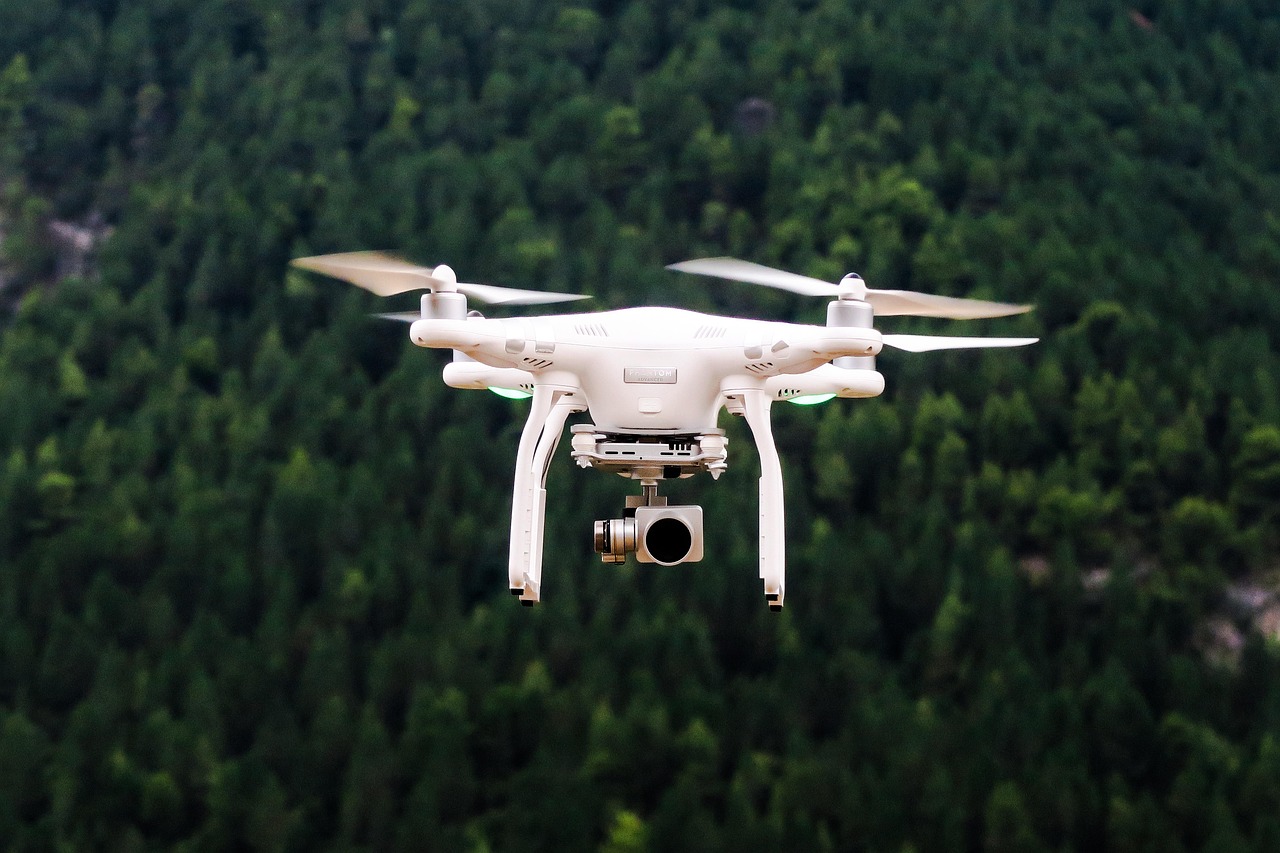
Drones threaten armored maneuver, but maneuver depends on speed, not tanks. A look at the air littoral idea and the control problem it leaves unsolved.
Key takeaways
The problem Drone-saturated battlefields make armored maneuver look obsolete, and many armies respond by adding drone fires in front of the same tanks.
Core insight Interwar maneuver succeeded through speed, not armor, so a robotic maneuver unit must be fast and free of terrain, but control links and operator limits remain unsolved.
Practical outcome Treat the air littoral concept as a hypothesis to test, and invest in autonomy and resilient communications before reorganizing maneuver units.
Maneuver warfare is not dead, and it never depended on tanks. It depends on speed that lets an attacker act before the defender can organize. Drones have made that harder for armored vehicles. They have not made it impossible for armies willing to rebuild what a maneuver unit is.
The argument gained fresh attention on October 8, 2026, when War on the Rocks published George Dougherty's "Achieving Breakthrough," which holds that U.S. ground forces need a leap comparable to the move from horse cavalry to the tank. This analysis agrees with the central claim, tests the part that is still speculative and adds the constraint the piece leaves thin.
What Maneuver Warfare Means

The term is used loosely. A 2014 War on the Rocks analysis by Jeff Becker and Todd Zwolensky noted that service and joint doctrine "provide confusing and sometimes conflicting guidance" on what maneuver means. The Army treats movement and maneuver as one of its elements of combat power. Marine Corps doctrine uses maneuver warfare more broadly, as action in any dimension, whether temporal, psychological or technological, to gain an advantage. The common thread is relative advantage, not a vehicle type.
Dougherty gives a working definition. Maneuver wins quickly "not by grinding away an enemy force with fires," but through penetration, flanking and envelopment that shatter cohesion. It does not exclude attrition. It describes how a force uses speed to avoid fighting on the enemy's terms.
For a wider view of how doctrine shapes outcomes, see our explainer on military doctrine.
Why Maneuver Looks Broken

Dougherty draws the parallel to 1914. Armies entered the First World War built to move, and machine guns and heavy artillery sent them into trenches within months. Today, he writes, drones and other precision robotic weapons fill low-altitude airspace and destroy tanks and other large vehicles near the front in Ukraine. He adds that Ukrainian units have shown in exercises that they can defeat front-line NATO armored units, and that Hezbollah is using similar drones against Israeli forces in Lebanon. Those are the author's assertions, drawn from his reading of events. We have not independently verified them.
The response he criticizes is the one many armies prefer: use mass drone fires to clear a path for armor. In 1914 to 1918, he notes, the equivalent was the creeping barrage and the maxim that "the artillery conquers, the infantry occupies." It produced casualties for modest gains.
The Historical Lesson: Speed, Not Armor

The interwar solution, Dougherty argues, was not protection. It was tempo. He cites the British theorist J.F.C. Fuller, who wrote that "the main power of the tank does not rest in its armor and weapons but in the paralyzing effect" of its speed.
"Speed, therefore, is what is to be exacted before anything else from the armored weapon."
- Heinz Guderian, as quoted in War on the Rocks
German panzer divisions preferred lighter, faster tanks over the thicker armor the French favored. Speed produced surprise and shortened the window in which antitank fires could concentrate. The lesson is uncomfortable for a force that equates maneuver with heavy armor. A slow, protected vehicle on a drone-dense front gives the enemy time to observe, decide and strike.
The Air Littoral Proposal
Dougherty's solution rests on the "air littoral," the very low airspace where small drones operate. He asks planners to stop treating those drones as small aircraft that deliver fires. He proposes treating them as unmanned ground vehicles that do not touch the ground, able to move at drone speed and ignore terrain. Maneuver units built on such platforms, he argues, would be smaller, more numerous and better at concentrating and dispersing quickly.
This is a concept, not a fielded capability. No army has organized a maneuver formation this way, and the article does not claim otherwise. The proposal is valuable because it identifies the right variable, speed and freedom from terrain, and tests the platform assumption instead of defending it.
Where the Argument Is Thin: Control
The weakest point is control. A maneuver unit has to be commanded at tempo, and robotic mass imposes limits. A separate War on the Rocks analysis of Ukraine's ground robots, by Lesia Bidochko, reports that the CEO of Ark Robotics estimates no more than one percent of systems used in combat are truly autonomous. Today, each additional drone generally needs another operator. Units already alternate among radio, Starlink, fiber-optic cable and aerial relays depending on distance and electronic warfare.
That is a speed problem. A formation that needs a person for every machine, linked by channels that jam, cannot move at the pace the proposal requires. The practical edge for maneuver will come from software that lets one person supervise several systems, navigation that works without GPS and automatic switching among communications channels. Those are the priorities Bidochko cites from the Kyiv School of Economics Institute. See our analysis of Russia's patent for a hybrid ground-air robot for an example of designers attacking the same boundary between ground and air.
Strengths and Weaknesses
The strengths of the robotic maneuver idea are clear. It aims at tempo, the real source of past breakthroughs. It accepts attritable platforms. It builds on what drones already do: reach, persistence and low cost.
The weaknesses are equally clear. The concept depends on control links that adversaries will contest. It has no tested organization, doctrine or logistics. And it risks repeating the 1914 error in another form, by adding fires to maneuver without changing the maneuver unit.
What Adversaries Get Right or Wrong
An adversary who has learned to find and kill slow vehicles will adapt to fast robotic ones. Speed buys surprise only until the defender learns the pattern. The contest in this field is a cycle of adaptation, and the side that adapts its units faster than the other keeps the initiative. Our analysis of how drones changed the battlefield traces that cycle through the Ukraine war.
Final Assessment
Maneuver warfare survives the drone age if armies treat it as a theory of tempo and cohesion, not a defense of tanks. Dougherty is right that the answer is a new kind of maneuver platform. The unresolved question is command and control at speed. Until a formation proves it can move fast under jamming and with limited operators, the air littoral remains a promising hypothesis, and armor-led maneuver remains an expensive habit.
FAQs about maneuver warfare
What is maneuver warfare?
A way of fighting that uses speed and surprise, through penetration, flanking and envelopment, to shatter an enemy's cohesion instead of destroying it piece by piece.
Have drones made maneuver warfare obsolete?
They have made slow armored maneuver far more dangerous in Ukraine. Analysts such as George Dougherty argue maneuver survives if its platforms become faster and robotic.
What is the air littoral?
The very low airspace where small drones operate. Dougherty proposes treating drones there as unmanned ground vehicles that do not touch the ground.
Is a robotic maneuver unit fielded anywhere?
Not to our knowledge. It is a concept. The article proposing it does not claim a fielded formation.
What is the main obstacle to robotic maneuver?
Control. Each additional drone generally needs another operator, and communications links face jamming, which limits tempo.
Frequently Asked Questions
What is maneuver warfare?
A way of fighting that uses speed and surprise, through penetration, flanking and envelopment, to shatter an enemy's cohesion instead of destroying it piece by piece.
Have drones made maneuver warfare obsolete?
They have made slow armored maneuver far more dangerous in Ukraine. Analysts such as George Dougherty argue maneuver survives if its platforms become faster and robotic.
What is the air littoral?
The very low airspace where small drones operate. Dougherty proposes treating drones there as unmanned ground vehicles that do not touch the ground.
Is a robotic maneuver unit fielded anywhere?
Not to our knowledge. It is a concept. The article proposing it does not claim a fielded formation.