How drones changed the battlefield
By Declan Farr · May 10, 2026
Category: tactics-and-doctrine
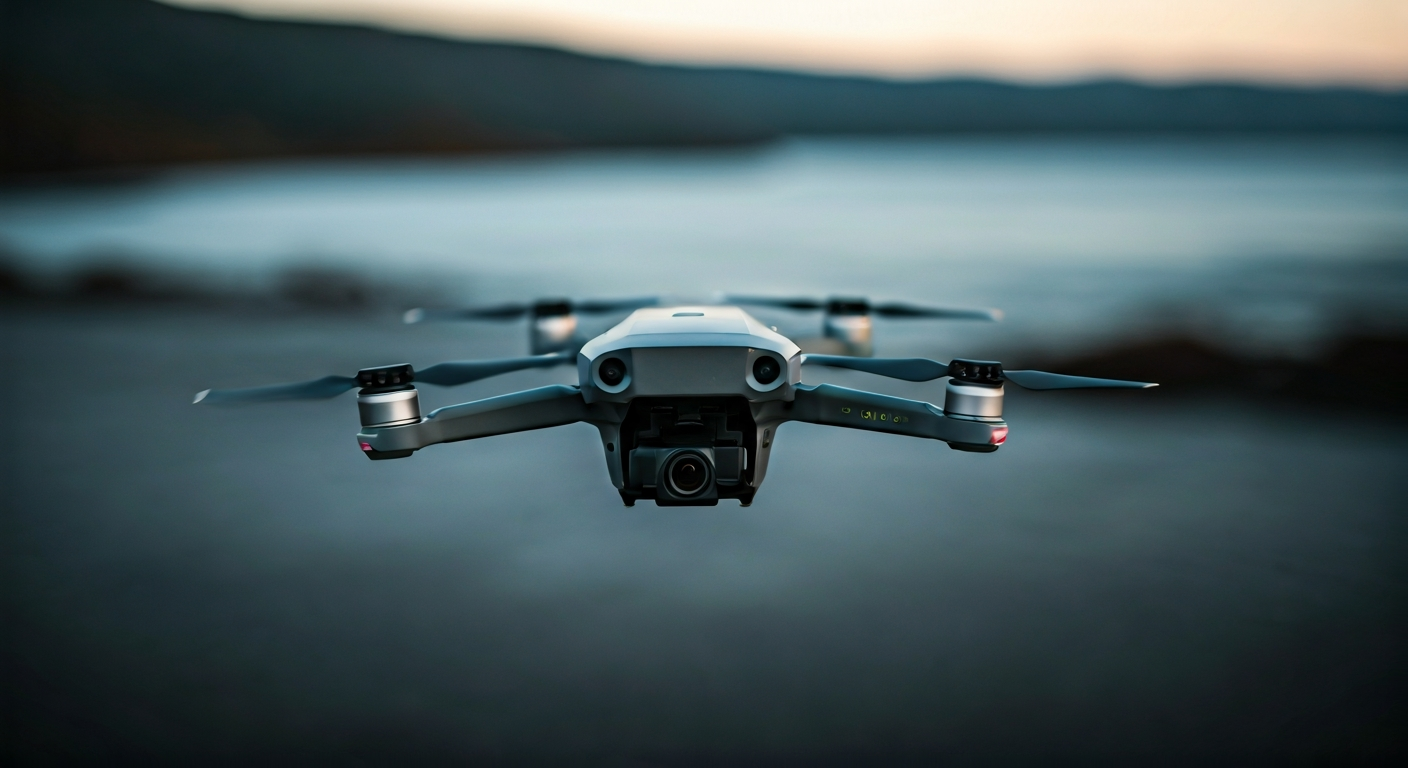
How drones changed the battlefield is visible in one number: roughly 70 to 80 percent of Russian casualties in a recent phase of the Ukraine war were attributed to drones - a proportion that rewrites nearly everything doctrine assumed about modern ground combat.
Key takeaways
The problem Most military doctrine was written before drones made persistent aerial observation and cheap precision attack available to every level of command.
Core insight In Ukraine, drones may now account for 70 to 80 percent of Russian casualties, a proportion that reshapes force protection, logistics, and command behavior.
Practical outcome Readers can assess whether a given military's doctrine and procurement account for the economic and tactical logic that makes drone attrition so difficult to reverse.
The soldier who trained for years to read terrain, to listen for engine noise, to move under cover of darkness - that soldier is now being hunted by something that weighs less than a kitchen appliance, costs a few hundred dollars, and can be piloted from a folding chair three miles away. Whatever you thought you knew about what makes a battlefield lethal, the drone has quietly rewritten most of it.
How drones changed the battlefield is not a question with a single clean answer. It is a set of layered changes - to reconnaissance, to logistics, to the basic calculus of whether you can move in daylight - that have compounded on top of each other faster than most military institutions have been able to absorb. This guide works through those changes systematically, drawing on the most documented case study available: the war in Ukraine, where drone warfare has reached a scale and tempo that no military planner seriously anticipated.
Understanding What Drones Actually Changed
It is tempting to frame drones as simply a cheaper form of air power. They are not. The difference is architectural. Traditional air power requires runways, maintenance crews, trained pilots who take years and millions of dollars to produce, and an institutional infrastructure that sovereign states have spent decades building. A first-person-view (FPV) racing drone modified to carry a shaped charge requires none of that. It requires a motivated operator, a short training period, and a supply chain that runs, in many cases, through commercial electronics vendors.
What this means in practice is that the barrier to entry for precision aerial attack has collapsed. That collapse has consequences for every level of warfare - tactical, operational, and strategic - because the same economics that let a state field thousands of drones also let a non-state actor, a well-funded militia, or a determined insurgency do the same thing at smaller scale. The battlefield has not just become more dangerous. It has become dangerous in a new direction, and that direction runs from the bottom up as much as from the top down.
Ukraine has provided the sharpest data set. Ukrainian drone forces reported killing or wounding 156,735 Russian soldiers between December 2025 and April 2026. Current estimates suggest drones may now be responsible for somewhere between 70 and 80 percent of Russian battlefield casualties in that phase of the conflict. That figure, if it holds under scrutiny, is one of the more significant data points in modern military history. No single weapons category has dominated battlefield attrition at that proportion since the machine gun reshaped the Western Front a century ago.
Why This Shift Happened So Fast
Military technology usually diffuses slowly. Radar, jet engines, precision-guided munitions - all of these moved from laboratory to widespread operational use over periods of a decade or more, filtered through procurement systems, classified development programs, and the general friction of institutional adoption. Drones broke that pattern because the core technology was already civilian.
The FPV drone that dominates Ukrainian trench warfare today is descended directly from hobby racing drones. The image processing that allows a drone to lock onto a target and follow it uses computer vision libraries that were being developed for self-driving cars and consumer cameras. The radio control systems, the battery technology, the lightweight composite frames - all of it had already been refined by a global consumer electronics market before any military planner thought to ask what happened if you strapped an anti-tank grenade to one.
Ukraine accelerated the development cycle further by integrating civilian engineers directly into the war effort. Ukrainian drone programs have iterated through design generations in weeks rather than years, responding to Russian electronic countermeasures with software updates and hardware modifications at a pace that a conventional defense procurement process cannot match. This is not a story about one side having better technology. It is a story about what happens when the development loop compresses from years to weeks and the battlefield becomes its own test range.
Reconnaissance and the End of Concealment
Before drones became ubiquitous, concealment was still a viable tactical option for most ground forces. You could move a column of vehicles at night and have reasonable confidence that the enemy did not know your exact position. You could establish a command post in a treeline and expect it to remain unobserved for hours or days. That confidence is now gone, or very nearly so, for any force operating near a well-equipped adversary.
Small reconnaissance drones - cheap commercial quadcopters in many cases - have given company and even platoon-level commanders a persistent overhead picture that was previously available only to brigade headquarters with dedicated aviation assets. The effect on tactics has been immediate. Units have to assume they are being watched whenever they are within drone range of the enemy, which in Ukraine effectively means anywhere near the front. Movement must be planned around drone observation windows, which shift as batteries die and operators rotate. The old rhythms of the battlefield, built around the limitations of ground-level observation, no longer apply.
This has pushed forces underground, into fortified positions and tunnels, to a degree not seen since the First World War. The parallel is uncomfortable, and military historians have noted it. When observation becomes total, the tactical response is to disappear below grade. The drone did not cause that response, but it accelerated the logic that produces it.
Precision Strike at Scale and Low Cost
The FPV attack drone has effectively created a category of weapon that sits between a sniper round and a precision-guided missile - cheaper than either in aggregate effect, and available in quantities that overwhelm point defenses. A single FPV drone costs, depending on the configuration, somewhere in the range of a few hundred to a few thousand dollars. A single anti-drone countermeasure missile costs orders of magnitude more. The arithmetic of that exchange ratio is not favorable for the defender if the attacker can sustain volume.
In Ukraine, drone operators have developed a library of tactics around this asymmetry. Drop munitions from above onto vehicle hatches, where armor is thinnest. Thread an FPV drone through a window or into an open vehicle bay. Use one drone to flush personnel from cover and a second to strike them in the open. These are not improvised accidents. They are documented techniques, some of them circulating openly in operator communities and military analysis circles, refined through thousands of engagements.
The implication for force protection is significant. Armor that was designed to defeat shaped charges from the side or front offers less protection against attack from directly above. Vehicle designs are being reconsidered. Field modifications - wire cages, mesh screens, improvised explosive reactive tiles on roof surfaces - have appeared across multiple theaters as crews attempt to complicate the terminal approach angle. These are the kinds of adaptations that eventually make their way into formal doctrine, but they always lag the threat by at least one iteration.
Electronic Warfare as the Tactical Answer - and Its Limits
The military response to the drone threat has leaned heavily on electronic warfare: jamming the radio links that connect operator to aircraft, spoofing GPS signals to disorient navigation systems, using software-defined radios to detect and classify drone signatures. In Ukraine, both sides have fielded substantial electronic warfare capabilities, and the interaction between drone operators and jammers has produced a running technical competition that updates in near-real time.
The problem is that electronic warfare is not a permanent solution. Operators adapt by switching frequencies. Manufacturers build drones that can navigate autonomously using optical flow or terrain-following algorithms that do not rely on radio links or GPS. Fiber-optic-guided drones, which cannot be jammed because they communicate through a physical cable they trail behind them, have appeared in Ukrainian service. Each countermeasure generates a counter-countermeasure, and the cycle continues at the pace the drone operators set, not the pace the electronic warfare community can sustain through institutional channels.
Logistics and the Changed Risk Calculus for Support Elements
One of the less-discussed consequences of drone proliferation is what it has done to logistics. Supply vehicles, fuel trucks, ammunition resupply convoys - all of these were already high-value targets, but they moved with a degree of practical impunity several kilometers behind the forward line because getting a precision weapon onto a moving vehicle at that distance was difficult. Drone ranges have eroded that buffer zone considerably.
Ukrainian long-range drones - including purpose-built systems that have struck targets deep inside Russian territory - have demonstrated that the concept of a safe rear area is increasingly difficult to sustain. For Russian forces, the effect has been visible in logistics behavior: dispersed supply points, night movement, reduced vehicle concentrations. These are not new tactics, but they are being applied at a depth and frequency driven by a threat that did not exist at this scale five years ago. When support elements cannot move freely in daylight, the forward edge of the battlefield is not the only place where the drone is reshaping behavior.
Command, Morale, and the Psychological Weight of Persistent Observation
There is a dimension to drone warfare that does not show up in casualty counts but is present in nearly every account from soldiers who have spent time in drone-saturated environments. It is the weight of knowing that you are almost certainly being watched, that movement draws attention, that any moment of exposure - stepping outside a position, crossing an open field, moving a vehicle - may be observed and acted on within minutes.
That psychological pressure has effects on command behavior that are difficult to quantify but real. Commanders become reluctant to move their posts, which degrades their ability to see the ground. Soldiers become reluctant to leave cover, which reduces tactical flexibility. The suppressive effect of drone observation is not identical to being under fire, but it is not entirely different either. It wears on people over time, and its effect on unit cohesion and operational tempo is something military psychologists and doctrine writers are only beginning to systematically study.
The war in Ukraine has, in this sense, become an unintentional laboratory for understanding not just how drones destroy things, but how they constrain the behavior of anyone who knows they are present.
When Existing Doctrine Is No Longer Sufficient
If you are a defense planner, a procurement officer, or a military historian trying to understand where this is heading, the honest answer is that most existing doctrine was written for a world where the threat described above did not exist at this scale. Combined arms doctrine assumes suppression windows, movement corridors, and observation gaps that drones are systematically closing. Air defense doctrine was designed around threats that cost millions per unit, not hundreds. Counter-insurgency doctrine was built for environments where the insurgent did not have persistent aerial surveillance.
None of that doctrine is worthless, but all of it needs to be read against the question of what changes when a force operating against you can field hundreds of aerial observers and attack platforms at a price point that makes attrition economics work in their favor. The answers are not settled, and any institution that tells you they have figured it out is probably working from a model that the next six months of Ukrainian data will require them to revise.
The drone has not ended the fundamentals of warfare - terrain still matters, logistics still matters, training and morale still matter. But it has changed the conditions under which those fundamentals play out, and the gap between the institutions that have absorbed that change and those that have not is going to be visible the next time a major conventional conflict tests the question in earnest.
Frequently Asked Questions
How have drones changed the battlefield in Ukraine specifically?
Ukraine is the most documented case of large-scale drone warfare to date. Ukrainian drone forces reported killing or wounding over 156,000 Russian soldiers between December 2025 and April 2026, with current estimates suggesting drones accounted for 70 to 80 percent of Russian battlefield casualties in that period. The conflict has seen both sides use reconnaissance drones to eliminate concealment, FPV attack drones to strike armor and personnel at low cost, and long-range systems to hit logistics infrastructure well behind the front line.
What types of drones are most commonly used in modern ground combat?
Three categories dominate current ground combat. Small commercial quadcopters modified for reconnaissance give platoon-level commanders overhead observation that previously required brigade-level aviation assets. First-person-view (FPV) drones, descended from hobby racing equipment, carry shaped charges and are used for direct attack on vehicles and personnel. Larger fixed-wing or multi-rotor systems carry heavier payloads and operate at longer ranges, hitting logistics and command targets well behind the forward line. Fiber-optic-guided variants have also appeared to defeat electronic jamming.
Why has it been so difficult to defend against drone attacks?
The core problem is economic. Dedicated anti-drone missiles cost orders of magnitude more than the drones they intercept, so a defender who relies on them will exhaust expensive inventory faster than an attacker can exhaust cheap drones. Electronic jamming works against radio-linked drones but not against autonomous or fiber-optic-guided systems. Physical countermeasures - wire cages, mesh screens on vehicles - complicate but do not reliably stop FPV attacks. Each countermeasure generates an adaptation from drone operators, and those adaptations often arrive faster than institutional procurement can respond.
How are drones affecting military doctrine and tactics?
Drones are forcing a reconsideration of assumptions built into combined arms doctrine, air defense doctrine, and logistics planning. Persistent drone observation has pushed ground forces to minimize daylight movement, harden positions, and in some cases construct underground infrastructure not seen at this scale since World War One. Logistics convoys now operate under threat at distances that were previously considered safe. Command posts cannot remain static. Doctrine writers are revising guidance, but the pace of tactical adaptation on the ground has consistently outrun the pace of formal doctrinal update.
Will drones replace traditional ground forces or air power?
Not in any near-term timeframe that current evidence supports. Drones have significantly altered the conditions under which ground forces operate and have eroded some advantages that conventional air power held, but terrain, logistics, human judgment, and the ability to hold and administer ground still require personnel and combined-arms formations. The more accurate framing is that drones have changed the cost structure of certain battlefield tasks - reconnaissance, precision strike, harassment - in ways that force ground and air forces to adapt, not disappear. The institutions that adapt soonest will have a meaningful operational advantage over those that treat drone integration as a procurement problem rather than a doctrinal one.